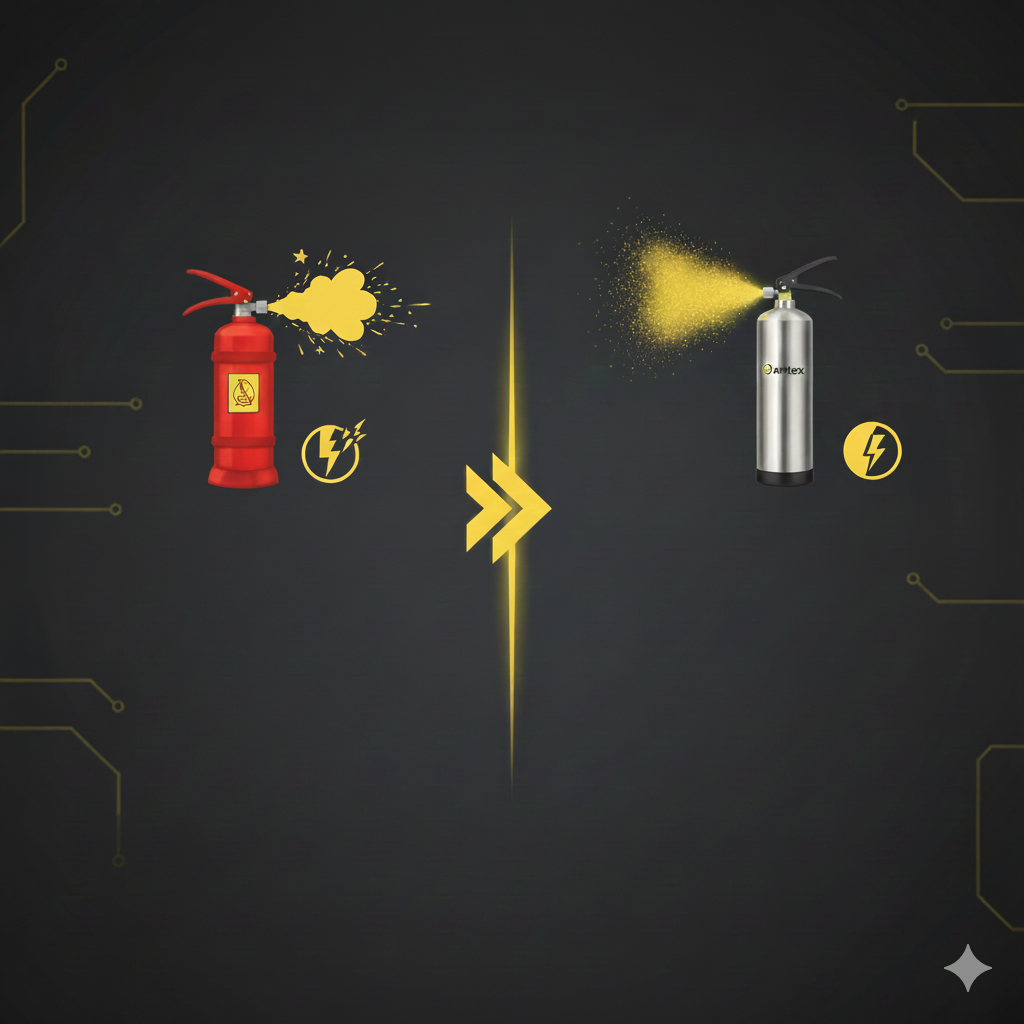
Fire incidents impact more than just the affected area—they interrupt operations, damage assets, and lead to costly recovery periods. While conventional fire extinguishers control flames, they often create additional problems such as water damage, chemical residue, and equipment corrosion. Water mist fire extinguishers are designed to address both fire suppression and post-fire recovery, making them a superior solution for environments where downtime is expensive.
1. How Water Mist Technology Works
Water mist extinguishers release microscopic deionized water droplets. These fine particles create a powerful fire suppression effect through three mechanisms:
Rapid Cooling: Tiny droplets absorb heat energy and turn into steam, quickly lowering flame temperature.
Oxygen Displacement: Steam expansion reduces oxygen concentration around the fire.
Radiant Heat Blocking: The mist forms a barrier that prevents fire spread.
This multi-layered approach extinguishes fire faster and more efficiently than traditional water jets.
2. Reduced Physical Damage
Minimal Water Impact
Mist extinguishers use significantly less water than standard water-based extinguishers.
Result:
No flooding, less structural damage, and protection for furniture, documents, and interiors.
No Chemical Residue
Unlike powder or foam extinguishers, mist systems use pure water.
Result:
No toxic cleanup, no contamination of goods, and no damage to sensitive environments like hospitals or food facilities.
Electrical Equipment Safety
Deionized mist is non-conductive when used properly.
Result:
Servers, control panels, and machinery can be protected without short circuits or electrical failures.
3. Faster Return to Operations
Traditional extinguishers often require:
Deep cleaning of residue
Equipment repairs
Ventilation system maintenance
Drying of soaked interiors
Water mist avoids these issues. After discharge, most areas need only light inspection and drying, allowing operations to resume within hours instead of days.
4. Prevention of Re-Ignition
Unlike CO₂ extinguishers, which do not cool surfaces, mist extinguishers lower surface temperatures. This reduces the risk of hidden hotspots reigniting, decreasing monitoring time and extended shutdowns.
5. Ideal Use Environments
Water mist extinguishers are especially valuable in:
Offices with electronics
Data centers and server rooms
Hospitals and laboratories
Hotels and commercial spaces
Libraries, museums, and archives
In such environments, secondary damage often costs more than the fire itself.
6. Environmental and Health Advantages
No harmful chemicals
Safe for occupied spaces
Lower environmental impact
Reduced cleanup waste
This makes mist technology aligned with modern safety and sustainability standards.
Conclusion
Water mist fire extinguishers do more than stop fires—they protect infrastructure, equipment, and operational continuity. By minimizing water damage, eliminating residue, and reducing recovery time, they help businesses avoid prolonged downtime and costly repairs. For organizations where uptime and asset protection are critical, mist technology represents a smart and forward-looking fire safety investment.