

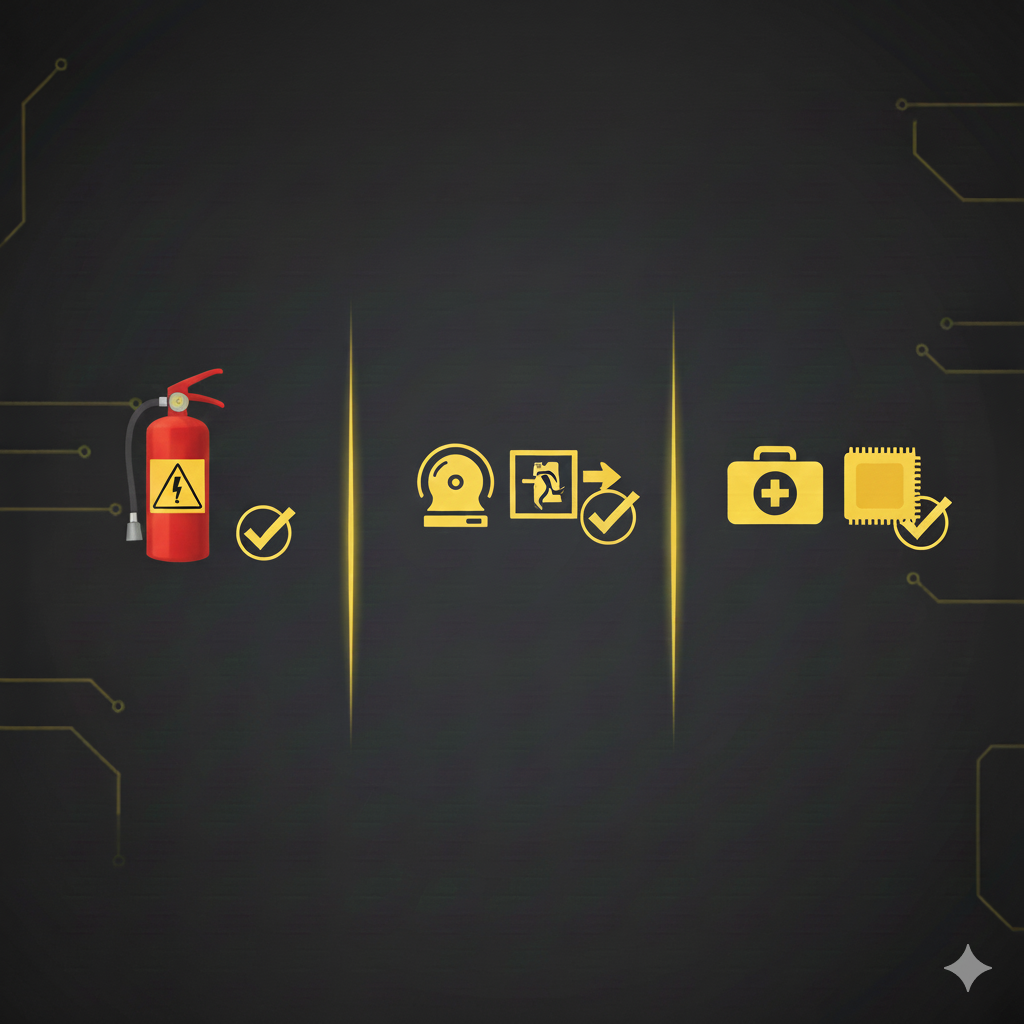
Workplaces house people, equipment, documents, and critical infrastructure. A minor fire incident can escalate into major operational, financial, and legal consequences if safety measures are inadequate. A proactive fire safety checklist ensures preparedness and reduces the likelihood of severe damage or downtime.
Below is a practical and comprehensive checklist for maintaining fire safety in offices and commercial environments.
1. Fire Prevention Measures
Prevention is the first line of defense.
Electrical wiring inspected regularly
No overloaded power outlets
Flammable materials stored safely
Proper housekeeping to avoid clutter
Smoking restrictions enforced
Kitchen/pantry fire safety rules in place
Goal: Eliminate common ignition sources.
2. Fire Detection Systems
Early detection minimizes spread.
Smoke detectors installed in key areas
Heat detectors in kitchens and equipment rooms
Fire alarm system functional and tested
Alarm audibility across the building
Backup power supply for alarm systems
Goal: Detect fires at the earliest stage.
3. Fire Suppression Equipment
Correct equipment must be available and maintained.
Appropriate fire extinguishers (water, CO₂, foam, mist, or powder)
Extinguishers placed at visible and accessible points
Pressure gauges checked monthly
Annual servicing and certification
Fire hose reels (if applicable) tested
Goal: Immediate control of small fires.
4. Emergency Exits & Evacuation Routes
Safe evacuation saves lives.
Clearly marked emergency exit signs
Exit paths free of obstruction
Emergency lighting functional
Staircases accessible
Assembly point designated outside the building
Goal: Safe and quick evacuation.
5. Staff Training & Awareness
People must know what to do.
Fire safety induction for new employees
Fire extinguisher usage training
Evacuation drill conducted at least twice a year
Fire wardens appointed per floor
Emergency contact numbers displayed
Goal: Reduce panic and ensure coordinated response.
6. Electrical & Equipment Safety
Electrical faults are a leading cause of fires.
Regular inspection of office equipment
Proper server room cooling
Surge protection systems installed
No damaged cables or exposed wiring
Goal: Prevent electrical fire hazards.
7. Documentation & Compliance
Legal compliance protects the organization.
Fire risk assessment conducted
Maintenance logs for alarms and extinguishers
Evacuation plan documented and displayed
Compliance with local fire safety regulations
Goal: Meet legal and insurance requirements.
8. Special High-Risk Areas
Certain zones need extra care.
Server rooms with appropriate suppression systems
Kitchens with fire blankets and extinguishers
Storage areas with proper ventilation
Generator rooms with fire detection
Goal: Protect critical infrastructure.
Conclusion
Fire safety in offices and commercial spaces requires more than equipment—it demands continuous monitoring, training, and system readiness. By following this essential checklist, organizations can significantly reduce fire risks, limit potential damage, and ensure the safety of employees and visitors. A prepared workplace is not just compliant—it is resilient.